Research Article | | Peer-Reviewed

Problem of Financing Local Development in Decentralized Communities: An Answer Through the Promotion of Tourism in Seguela (Côte d’Ivoire)

Received: 31 May 2026     Accepted: 13 June 2026     Published: 30 June 2026
Views:       Downloads:
Abstract

Since the 1980s, decentralization has improved local development adaption in a number of sub-Saharan African nations. However, in recent decades, this approach of autonomous local administration has encountered challenges, such as a decline in funding. However, Côte d'Ivoire's Law No. 2003-208 of July 7, 2003, on the transfer and distribution of state competencies to local authorities, permits local elected officials to mobilise funds locally by establishing revenue-generating ventures in a number of industries, including tourism. How can local tourism support local development in Côte d'Ivoire's decentralized villages given the country's diminishing financial resources? The goal is to demonstrate how local tourist marketing may serve as a lever for funding local development in the dynamic of enhancing living standards. 200 household heads in neighbourhoods chosen by reasoned choice participated in a questionnaire survey, field observation, direct and semi-direct interviews, and documentary research as part of an empirical method. The municipality of Seguela seems to be brimming with a variety of tourism opportunities. To highlight these potentialities, local officials have undertaken to boost local tourism through the opening of roads, the improvement of potable water supply and electrification, the creation of public spaces for tourist attraction, the cleaning of gutters and street sweeping, and especially the establishment of the "Worodougou Lôgôba" festival, etc. These municipal investments have resulted in: the commercialisation of agricultural products and local cultural craftworks, the emergence of various means of mobility, the attraction of customers to restaurants, maquis, and hotels; thus creating direct and indirect jobs. Due to the increased foreign cash earned by tourist taxes, this has made it easier to optimise local budgetary resources.

Published in Social Sciences (Volume 15, Issue 3)
DOI 10.11648/j.ss.20261503.15
Page(s) 141-152
Creative Commons

This is an Open Access article, distributed under the terms of the Creative Commons Attribution 4.0 International License (http://creativecommons.org/licenses/by/4.0/), which permits unrestricted use, distribution and reproduction in any medium or format, provided the original work is properly cited.

Copyright

Copyright © The Author(s), 2026. Published by Science Publishing Group

Keywords

Tourism Assets, Local Funding, Promotion of Local Tourism, Local Economy, Seguela

1. Introduction
Since 1980, decentralization has offered a better local adaptation of development in several countries in sub-Saharan Africa . And since then, local elected officials have made socio-collective investments providing new social services . However, in recent decades, this approach to local governance has encountered difficulties, including the dwindling of financial resources . However, in Côte d'Ivoire, Law No. 2003-208 of 7 July 2003 on the transfer and distribution of powers from the State to local authorities allows elected officials to mobilize financial resources locally by creating economic activities that generate additional foreign exchange in certain sectors such as tourism to finance local development . However, according to the World Tourism Organization (OMT, 2011) , some African countries that have enormous potential and attract more than one million tourists per year have lower tourism receipts than those of the United States and European countries.
Indeed, tourism is all the activities carried out by people, during their trips and stays, in places located outside their usual environment, for a minimum period of 24 hours or a consecutive period not exceeding one year, for leisure, business and other reasons not related to the exercise of a remunerated activity in the place visited. These movements lead to ancillary economic activities that offer services that are beyond the control of the financial authorities of the recipient countries. According to the "Hospitality-Report, 2016", this contribution would increase by an average of around 5.6% per year until 2026.
In Côte d'Ivoire, as soon as it gained independence, the State undertook large-scale actions for the development of the tourism sector between 1970 and 1980 (creation of the Ivorian Society for Tourism and Hotel Expansion; construction of major hotel infrastructures (Ivoire Hotel, President Hotel, Golf Hotel and SIETHO hotels, etc.). Despite these initiatives, the tourism sector remains impacted by the global economic crisis of the 1980s and the one triggered in 2002 that led to the partition of the country.
In addition, after the post-electoral crisis in 2011, the Ivorian State set a new institutional framework for the promotion of the tourism industry through a tourism investment code adopted in 2014; making the tourism sector the engine of PIB growth to multiply local tax revenues and create a reservoir of skilled and/or unskilled jobs at the local level. There is therefore a problem of financing local development through the promotion of tourism in decentralized communities.
How, in the face of dwindling funding resources, can local tourism be a means of financing local development in decentralized communities in Côte d'Ivoire?
The objective is to show that the promotion of local tourism can be a lever for financing local development in the dynamic of improving the environment and living conditions.
2. Materials and Methods
2.1. Presentation and Location of the Study Area
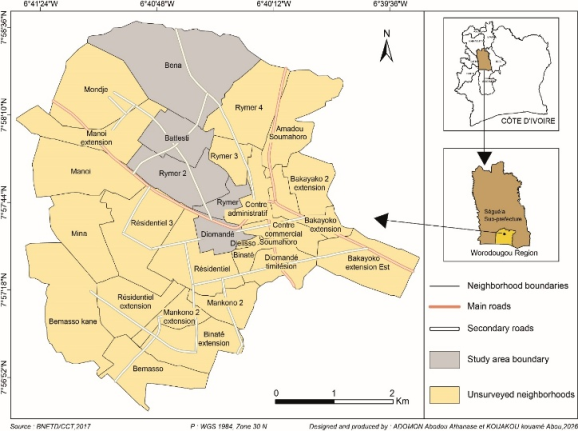
Seguela is located in the northwest of Côte d'Ivoire, 482 km from Abidjan and the capital of the Worodougou region. Established as a full-fledged municipality (Law No. 78-07 of 9 January 1978), this locality offers enormous tourist potential. Its natural and administrative borders are shared with the regions of Kabadougou and Bagoue to the north, the Haut-Sassandra region to the south, the Bafing and Tonkpi regions to the west, and the Bere region to the east (Figure 1).
Figure 1. Geographic location and location of the study area.
2.2. Data Collection Technique
In an empirical approach combining qualitative and quantitative methods, we carried out documentary research that made it possible to collect secondary data at the town hall from the administrative accounts and the initial budgets and the three-year municipal program to make an inventory of municipal actions and on the net. We then carried out a field observation from 27 February 2025 to 25 March 2025 which made it possible to identify the types and forms of tourist activities, their dynamism in the municipal development. Then semi-direct interviews were carried out with resource persons (head of the technical department of the town hall, head of finance of the town hall, head of socio-cultural services) from 2 to 4 March 2025 and with the director of the local ANStat on 10 March 2025 to complete the data collected. And finally, we carried out a questionnaire-guided survey from 27 February 2025 to 25 March 2025 among 200 heads of households made up of players in the tourism sector. The sample size was obtained from Schwartz's formula:
n =(tp)2×p(1-p)×N(tp)2×p1-p+(N-1)×y2
n: the sample size
N: Size of the target population (number of households)
P: Expected proportion of a population response or actual serving size
TP: Sampling confidence interval 95% or 1.96
y2: margin of sampling error 5% or 0.05
The calculation having given 382 respondents, we opted for 1/3, or 191 estimated at 200; selected on the basis of the selection criteria: to reside for at least 10 years on the municipal territory; be at least 25 years old; Be a financial support for their family; live in a neighbourhood with a population ≥ 3000 in urban areas and ≥,300 inhabitants in rural areas in 6 neighbourhoods (Table 1).
Table 1. Breakdown of respondents by neighborhood.

UNeighborhoods

Population by Neighbourhood

Sample

Rymer 2 (Urban area)

9449

54

Diomande (Urban area)

7689

44

Traore (Urban area)

6310

36

Batesti (Urban area)

6219

33

Rimer 1 (Urban area)

5027

26

Bena extention (Rural area)

694

7

Total

34694

200

Sources: Anstat / RGPH-2021. Directed by:
Kone Mariam and Adomon, 2025
3. Results
3.1. Tourism Potential to Be Developed Throughout the Municipal Territory in Seguela
3.1.1. A Natural Landscape Conducive to Fascinating Ecotourism
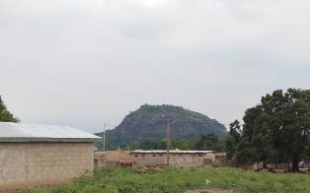
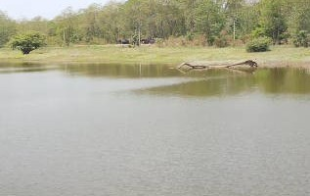
Seguela, located between the Sassandra River and the Marahoue, on the Seguela-Kani axis, there is a pond of sacred fish in Oussougoula, a sacred mountain "Massason de Bobi" with an altitude of 570 m (Figure 2) and a transition zone (savannah and forest) with a South Sudanese climate where a temperature alternates between 28°C and 30°C depending on the day and the season (long rainy season: July-October and the main drought season: November-June. In addition, we discover a hydrographic landscape dominated by the Sassandra river and the lake of the YANI dam (Figure 3) with its marshy surroundings where irrigated farming is practiced. In addition, the sacred fish pond in Oussougoula serves as a place of ritual of religious worship and blessing for the population.
Photograph KONE Mariam, 2025

Download: Download full-size image

Figure 2. A distant view of the sacred mountain of sualla.
Photograph KONE Mariam, 2025

Download: Download full-size image

Figure 3. Near the lake of the Yani Dam.
3.1.2. A Cultural and Historical Past Rich in Remains to Be Discovered
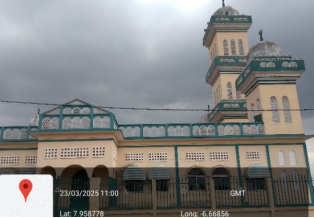
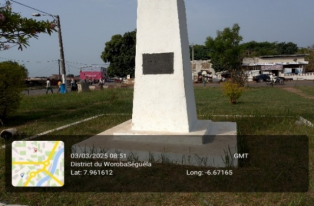
Seguela is a city that was influenced by Islam with the passage of Almamy Samory Toure, the great conqueror of the Manding Empire of Mali. However, legend attributes its creation to the Manding Keita people who came from Segou (Mali) at the end of the nineteenth century. This historical presence is visible today through a variety of religious and cultural sites such as the building housing the Alliance of the International Evangelical Charismatic Church (AEECI) called "VICTORY TEMPLE", which serves as a place for spiritual activities (songs, dances, praise, etc.), located in the residential area. Next to this building, we note the monument of Charles Menard (Figure 4) in front of the town hall of Seguela and the great mosque of Seguela (Figure 5).
Photograph KONE Mariam, 2025

Download: Download full-size image

Figure 4. Monument Charles Menard.
Photograph KONE Mariam, 2025

Download: Download full-size image

Figure 5. Great Mosque of Seguela.
You can also visit the cultural center of Madebgê, opposite the Rimer district 1, which symbolizes the acts of bravery of the fighter "Madegbê" for the liberation of prisoners during colonization.
3.1.3. Cultural Diversity Marked by a Multiplicity of Traditional Local Dances
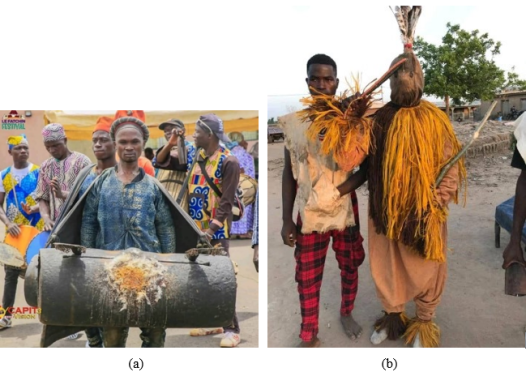
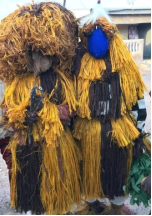
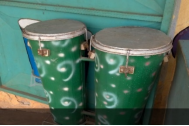
The intermingling of natives (the worodoukas), non-natives (Senoufo, Baoule, Bete, Gouro, etc.) and foreigners (Burkinabe, Malian, Senegalese, Guinean, etc.) has given rise to a multiplicity of cultural traditions and rites that are attractive to those interested in ethnography and African cultures. These include the "Guiniba ou doundounba" mask of Mongbara, a tam-tam (Figure 6) that appears only during the funeral ceremonies of personalities and rich people of the municipality.
Figure 6. (a et b): On the right the "Guiniba or doundounba" tam-tam and on the left the mask of the Guiniba of Mongbara. Photograph, COULIBALY Namory.
At festivals, you can also dance the "Geffê" animated by three masks (Figure 7) after the third day of Ramadan.
Photograph, Coulibaly Namory

Download: Download full-size image

Figure 7. An overview of the Gêffê masks.
Alongside these masks imbued with spirituality, there is the "Kouroubi", a dance performed by women in search of children. In Bena (a village included in the commune), you can discover the "yeye" dance, a celebration of rejoicing performed by married women, and the "Kâsse, Gbangnon" performed by the young girls of the village either after Ramadan or on ordinary days. All these historical, cultural and traditional potentialities suggest the presence of a wide range of tourist activities on the municipal territory to be enhanced.
3.1.4. A Multifaceted and Diversified Local Craft to Discover in Seguela
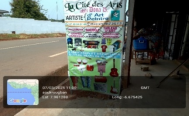
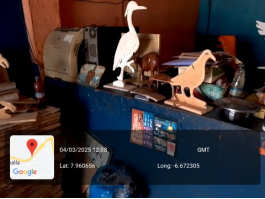
We noted the presence of several activities related to crafts in the Rimer 1 and Diomande extension district where artists (painters, calligraphers, sculptors) make iron tam-tams (Figure 8); artistic calligraphy paintings (Figure 9) and sculptural objects (Figure 10). Photograph KONE Mariam, 2025.
Figure 8. Iron Drums.
Figure 9. Poster of the Artistic Space.
Photograph KONE Mariam, 2025

Download: Download full-size image

Figure 10. Sculptural objects.
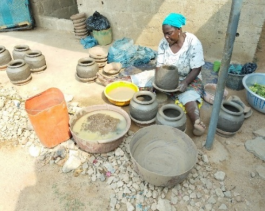
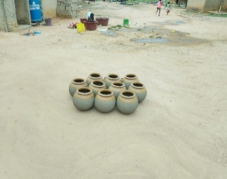
In the villages of Kavena, Sualla, Diamina, we discover pottery making activities by women (Figures 11 and 12).
Photograph KONE Mariam, 2025

Download: Download full-size image

Figure 11. A woman making canaries.
Photograph KONE Mariam, 2025

Download: Download full-size image

Figure 12. Drying canaries.
How do local elected officials promote all these tourist potentialities in Seguela?
3.2. Actions Carried Out by the Municipality to Boost Local Tourism in Seguela
3.2.1. Municipal Investments in the Socio-cultural and Leisure Fields
In the socio-economic field, important actions have been carried out in the form of property rehabilitation and redevelopment (Table 2).
Table 2. Municipal investments made in the socio-cultural and leisure field between 2019-2023 in CFA francs.

Municipal actions

Anticipated amounts

Amount invested

Completion dates

Construction of a fourth public garden

5 000 000

5 000 000

2019

Real estate equipment of the municipal hostel

7 000 000

6 973 400

2019

Construction of a fourth public garden

5 636 000

5 636 000

2020

Construction of a VIP reception hangar

25 000 000

14 904 265

2021

Rehabilitation of the Seguela cultural centre

61 036 000

30 627 870

2021

Construction of the fence of the Oxygène de Seguela public garden, length 343m

19 472 000

18 995 544

2023

Construction of a 200-place market in the Diomande district, extension

1 973 000

-

2023

Rehabilitation of an eight-building building (8) Rooms at the Municipal Inn

35 287 000

35 287 000

Programme triennial 2023

Development of two (2) playgrounds in the residential and administrative center of Seguela

10 938 000

10 938 000

2020

Stadiums, sports fields, playgrounds, swimming pools

49 407 000

12 143 210

2023

Construction of the fence of two playgrounds in the residential area and administrative center of Seguela (length: 305.40 m; height 2.2 m

25 832 000

-

2023

Total

252 581 000

146 505 289

Source: Administrative accounts and preliminary budgets of the town hall from 2019 to 2023 and the three-year programme (2023 to 2024).
Photograph KONE Mariam, 2025

Download: Download full-size image

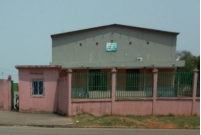
Figure 13. A view of the main entrance of the Madegbê Cultural Centre in Seguela.
According to Table 2, the amount of 35,287,000 f CFA francs was invested solely in the rehabilitation of the municipal hostel, to accommodate potential tourists. This is 13.97% of the total amount of 252,581,000 f CFA francs invested between 2019 and 2024. For the rehabilitation of the Seguela cultural center (Figure 13), it is the sum of 30,627,870 f CFA, or 12.12% of the total amount of 252,581,000 f CFA invested between 2019 and 2024.
Regarding the development of playgrounds and leisure areas, the municipality has invested a total amount of 23,081,210 f CFA francs to develop (the stadium, sports fields, playgrounds, the municipal swimming pool and for the construction of the fence of two playgrounds in the residential area). Our investigations revealed that these developments and redevelopments are part of the preparations for the CAN 2023 to accommodate the overflow of potential tourists and visitors during the CAN in Korhogo.
3.2.2. Actions to Open up Roads and Improve Various Networks Undertaken by the Municipality
Investments made in the field of road infrastructure (Table 3) provide easy access and a smooth movement of people and goods in the municipality of Seguela.
Table 3. Summary of municipal investments in roads in CFA francs.

Municipal actions

Anticipated amounts

Amounts invested

Completion dates

Addressing intersections and avenues

8 000 000

-

2019

Opening of the streets of the Rymer 4 and Bakayoko 2 districts extension

21 000 000

21 000 000

2019

Construction of ten (10) speed bumps in the municipality

2 000 000

2019

Opening of the streets of the new subdivision districts rymer 4 and Bakayoko 2 extension

7 219 000

5 511 060

2020

Addressing of the streets of the commune: triumphal arch at the entrance to the city of Seguela by Touba and the entrance to the city of Seguela

17 000 000

-

2023

Opening of the streets of the new subdivided neighborhoods of Seguela (Mankono 2, Fizanigoro, BAD)

17 000 000

-

2023

Total

70 219 000

28 511 060

Source: Administrative accounts and initial budgets of the
municipality of Seguela (2019-2023).
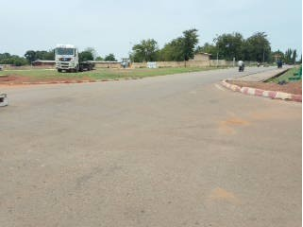
It appears from Table 2 that in 2019 and 2020, investments worth 21,000,000 f CFA and 5,511,060 f CFA were invested in the opening of the streets of the new Rymer 4 and Bakayoko 2 extension districts by the municipality (Figure 14).
Photograph KONE Mariam, 2025

Download: Download full-size image

Figure 14. A distant view of the road leading to the neighbourhoods Rymer 4 and Bakayoko 2 expansion.
These actions of reprofiling and addressing roads will facilitate mobility as part of the promotion of local tourism. Thus, we are witnessing the appearance of a new mode of public transport provided by machines called "saloni" and motorcycle taxis which serve the districts of the municipality. This dynamic activity generates additional taxes collected by the City Hall that these transporters pay depending on the vehicle.
3.2.3. Sanitation and Sanitation Actions Through the Cleaning of Gutters and Street Sweeping Promoted by the Municipality
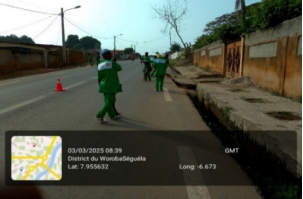
The environmental department of the town hall in charge of the maintenance and sanitation of public spaces has carried out actions within the framework of environmental protection. Thus, in 2019, to reduce the illegal dumping of household waste in residential areas or near entertainment areas, 200 garbage cans were purchased for an amount of 1,815,000 f CFA. On the other hand, agents recruited by the town hall are called upon every three days a week to clean the asphalt roads (Figure 15).
Photograph KONE Mariam, 2025

Download: Download full-size image

Figure 15. Gutter cleaning and cleaning agents at work.
3.2.4. Municipal Actions to Improve the Supply of Drinking Water and the Electrification of the Municipal Territory
The municipality of Seguela has benefited from the general electrification program of the 19 neighborhoods of its surrounding villages. This has been possible thanks to the various electrification projects as part of the 2020 emergence policy initiated by the State. These projects were led by the various mayors, whose task was entrusted to the CIE, also based in Seguela. As for drinking water supply, the YANI dam, which was used as a source of water by SODECI, was attached to the Sassandra River in 2025 to reduce the frequent water shortages in the 19 districts of the city and some surrounding villages (Bemasso, Bena, etc.).
Our investigations reveal that 74% of respondents are in favour of these municipal actions in the tourism sector. On the other hand, 8% disapprove while 18% have no opinion. Have these municipal investments had an impact in view of these mixed opinions?
3.3. Municipal Investments as a Means of Optimising Local Tax Resources in Seguela
Municipal actions in favour of tourism are variously noticeable on the municipal territory. Either in visitor stays, the creation of infrastructures, the development of the natural landscape for the interest of tourism, commercial establishments offering rooms for rent for accommodation for a passing clientele, the promotion of structures providing food and drink services for consumption (maquis or restaurants). However, the occupation of the municipality's public domain by these activities requires an authorisation which entails the payment of a fee. The municipality therefore has several taxes divided into various modes of activity. These resources (taxes and patents) are collected from economic operators operating in its territory (Act No. 2003-489 of 26 December 2003 on the financial regime for local authorities stipulates in articles 159 and 160 that any gainful activity carried out in a local territory is controlled and regulated by the local authority). The amount of the licence is set according to the nature of the activity: either 100 francs as a daily tax, so be it 5,000 francs per month. This is the case of the maquis and restaurants.
3.3.1. Municipal Actions to Facilitate Attraction to the Maquis and Existing Restaurants
The restaurant is a tourist establishment which, whatever its name, serves the public for food or drink to be consumed on the premises for a fee. For us, the so-called maquis restaurants are gastronomic spaces offering meals and drinks that are generally alcoholic to customers. They are also spaces where you can be distracted by the presence of the musical atmosphere. Meal prices are usually not expensive.
As for the maquis, it is an establishment of Ivorian or African specialties, light structures providing food and drink services to be consumed on site for a fee (Law No. 2014-139 of 24 March 2014 on the Tourism Code). Table 4 gives an overview of the maquis and restaurants existing in the municipal territory of Seguela.
Table 4. Inventory of existing maquis and restaurants in the municipality.

Naming

Geographical location

Maquis Tropic

Neighborhood Residentiel

Maquis la Source

Neighborhood Residentiel

Maquis Triangle

Neighborhood Rymer

Maquis le Felicia

Neighborhood Traore

Maquis espace Oasis

Neighborhood Rymer

Maquis le choco at Vero’s

Neighborhood Rymer

Maquis at Fiessou

Neighborhood Diomande

Maquis le colisee

Neighborhood Traore

Executive Restaurant

Neighborhood Diomande

Emarilsa Pastry

Neighborhood Diomande

Maquis la mannoise

Neighborhood Rymer

Maquis Lylyde

Neighborhood Bakayoko

Maquis the governor

Neighborhood Rymer

Maquis la Belle city

Neighborhood Residentiel

Bar Phoenix

Neighborhood Mannois

Maquis le Cailloux at Maï’s

Neighborhood Soukrougban

Maquis le Pelican

Neighborhood Traore

Maquis le Trophee

Neighborhood Diomande

Malika’s delights

Neighborhood Diomande

Maquis Village

Neighborhood Traore

Maquis le Campement

Neighborhood Diomande

Maquis Cafe du Woroba

Neighborhood Diomande

Total

22

Source: Regional Directorate of Tourism of Worodougou in Seguela, 2025
Analysis of the Table reveals a high concentration of maquis, and therefore an increased presence of potential tourists in the districts (Diomande and Rymer), so be it 56% because of their proximity to the large market, a place of daily gathering and frequent entertainment. These maquis offer African or traditional dishes (clear sauce, seed sauce, pistachio sauce, seed sauce and okra sauce with rice, foutou, etc.) at affordable prices that are appreciated by all. On the other hand, in the neighbourhoods (residential, Traore, Bakayoko, Manx and Soukrougban) where there is a low rate of maquis (46%), there is the emergence of activities selling dishes popular with Ivorians (garba, placali, rice, etc.) and disparate drink depots and shops in the residential neighbourhoods, Traore, Bakayoko, Manx and Soukrougban. This activity offers direct and indirect jobs to qualified and/or unskilled people for monthly incomes of between 12,000 and 48,000 f CFA francs. In general:
1) Cooks have a salary of 1000 f/day; 6000 f/week, so be it 24000 f in the month;
2) Waiters have a salary of 500 or 1000 f/day; of 3000 or 6000 f/week, so be it. 12000 or 24000 f in the month.
3) Kitchen assistants have a salary of 700 francs per day; of 4200 f/week and 16000 f in the month;
4) Divers have a salary of 500 f/day, 3000 f/week and 12000 f in the month.
As can be seen, this is a dynamic activity that provides additional foreign exchange in terms of flat-rate taxes on small traders and craftsmen instituted for the benefit of the municipalities, the rate and methods of collection of which emanate from the municipality by ordinance No. 61-123 of 14 April 1961 (art. 157).
3.3.2. A Hotel Business in the Making with Attendance and Stays in Hotel Receptives
Our investigations revealed that actions initiated by the municipal authorities have facilitated the emergence of accommodation receptives of varying quality such as hotels throughout the municipality (Table 5).
Table 5. Summary of hotel receptives in Seguela and their location.

Naming

Geographical location

Carrefour Hotel

Neighborhood Bakayoko

Hôtel la Grace

Neighborhood Rymer 4

Hotel Residence

Neighborhood Traore

Zonton'ka Hotel

Neighborhood Soukrougban

Hotel Terminus

Neighborhood soukrougban

Hotel Worodougou

Neighborhood Bakayoko

Hotel Belle etoile 2

Neighborhood Rymer extension

Beautiful view residence

Neighborhood Traore

Hotel Sunga

Neighborhood Residentiel

Hotel belle etoile 1

Neighborhood Rymer

Hotel le Rocher

Neighborhood Bakayoko

Hotel Minga

Neighborhood Rymer

Hotel the residence 2

Neighborhood soukrougban

Hotel Behanzin 2

Neighborhood Mannois

Paradisia residence

Neighborhood Residentiel

Municipal Hostel

Neighborhood Bakayoko

Source: Worodougou Regional Directorate of Tourism in Seguela. 2025
A total of 17 hotels have been identified in the municipality, including the largest (4) hotels in the Bakayoko and Rymer districts (Table 5). These districts are full of a high population density and are located around the administrative district. According to data provided by the regional tourism directorate, the commune of Seguela has the largest number of hotel arrivals (Table 6) in the Worodougou region.
Table 6. Distribution of incoming hotel customers in the urban landscape of Worodougou.

Centres urban areas Worodougou

Number of hotel receptives

Number rooms

Number beds

Jobs

Seguela

17

271

542

77

Sifie

1

7

14

1

Worofla

1

8

16

1

Kani

2

24

48

8

Morondo

1

10

20

2

Total

21

320

640

89

Source: Regional Directorate of Tourism of Seguela, 2023
This accommodation activity offers direct and indirect jobs more in Seguela than in other urban centers in the Worodougou region. This is 86.52% of a total of 89 jobs generated in the tourism sector in 2023 (Regional Directorate of Tourism of Seguela, 2023).
Our investigations show that tourism in Seguela is a source of socio-professional integration through various related activities in trade, transport, catering, hotels, informal guides, maintenance and cleaning agents, events, crafts, nightclubs, etc. Through these activities, the municipality collects so-called flat-rate taxes applicable to nightclubs such as bars or nightclubs, discotheques, cabarets, etc. In addition, there is the municipal hostel which offers accommodation services for a fee and generates so-called patrimonial and portfolio income from the use of public services belonging to the municipality.
3.3.3. The Appearance of New Means of Travel to Tourist Sites with Three-wheeled
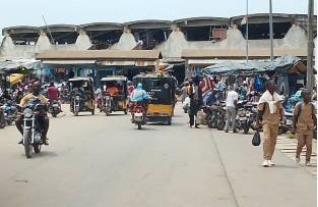
To reach the tourist sites, new means of service have appeared in the locality. These are the two-wheeled (motorcycle taxi) and three-wheeled (tricycle) called Saloni (Figure 16).
Figure 16. "Saloni" and motorcycle taxis carrying passengers at the large market of Seguela. Photograph KONE Mariam, 2025.
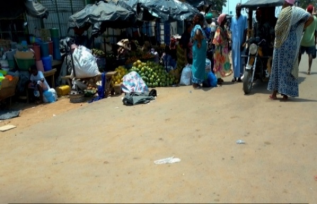
In fact, Act No. 64-294 of 1 August 1964 on the harmonization and coordination of road transport prohibits "two-wheelers" as a means of collective passenger transport in Côte d'Ivoire. However, Law No. 2003-489 of 26 December 2003, on the financial regime of local authorities (arts. 159 and 160), stipulates that any lucrative activity carried out in a local territory is controlled and regulated by the said authority . This illegal activity of public transport in Côte d'Ivoire generates flat-rate taxes and provides employment. These machines offer their service for a fixed uniform rate of 200 f CFA.
Like the other activities, there is also a tax reserved for carriers. This is the parking card. Its cost varies from one locality to another. Hence the laissez-faire attitude on the part of the local authorities, especially since this activity is subject to an operating permit issued by the town hall, which gives rise to a quarterly declaration levied as a flat-rate tax.
3.3.4. Marketing of Local Products and Handicrafts Sought by Tourists
The large market (Figure 17) is the place where all economic activities take place, including the sale of local products.
Figure 17. Market day. Sidewalks are congested stalls of commercial products. Photograph KONE Mariam, 2025.

Generally, tourists like this place, especially on market day in Seguela, because on this date, the costs of agricultural products (rice, yams.) and artistic works are accessible to all budgets. This is the case every Tuesday in the Diomande extension district near the bus station. Here art objects such as traditional clothes, lace, jewellery, canaries, pots of all kinds (.) are exhibited during the months of June, July and August when tourist activity is intense. This commercial activity contributes to the dynamism of the local economy.
3.3.5. Institution D’un Festival Annuel De «Worodougou Lôgôba»
Municipal actions have had an impact on local cultural tourism. This is materialized by the organization of festivals, exhibitions and events dedicated to the enhancement of economic wealth as was the case during the 3rd edition of the "Worodougou Lôgôba" at the Madegbê cultural center from April 18 to 21, 2025. This event saw the participation of actors from the economic world, craftsmen and entrepreneurs and especially political decision-makers during the conference of African and French-speaking consular chambers (CPCAF). This has been beneficial for the promotion of tourism in this locality. Here too, a tax is levied for the organisation of events (sporting activity, socio-cultural activity, etc.) of various kinds. The cost of the tax depends on the duration of the demonstration in the public place.
3.3.6. The Proliferation of Service Activities on the Municipal Territory
Service activities (telephone booths, car washes, vulcanisation workshops, and hairdressing salons, etc.) are growing significantly in the municipality. These service activities have the particularity of sedentary the youth of the local population in Seguela. They constitute a reservoir of employment in the face of unemployment; therefore encouraged by the local authorities because they support the local economy through the taxes and patents that these economic operators pay.
4. Discussion
The results of this study reveal that tourism is a sector of socio-professional integration through various activities such as trade, transport, catering, hotels, informal guides, maintenance and cleaning agents, events, crafts, etc. However, according to Bonin's work on the Crie communities of Eeyou Istchee in Quebec, the success of local tourism is based on the income generated and the number of jobs created with a direct impact on the local economy . This corroborates our results in the case of local tourism in Seguela.
In their work on tourism in San-Pedro (Côte d'Ivoire), go in the same direction when they state that the jobs (direct and indirect) generated by the activities of basic and complementary service providers in the hotel industry produce a multiplier effect of tourism spending in reception centres. Then, to conclude that tourism is a real driver of social development because it is a great generator of jobs. This is also the case in France, where the presence of tourist activities promotes the revitalization of decentralized territories, through the revaluation of shops, the restoration of old buildings or the development of local farmers' markets in rural areas .
Moreover, even if competition has become recurrent and is reflected in the provision of tourism services, Indigenous tourism, which creates 3500 jobs and generates $169 million in economic benefits per year in Quebec, allows young people to stay in the communities . This is what our results reveal, even if in our study framework, the statistical data still remain confidential. In this regard, believes that local elected officials have the law no. 2014-139 of March 24, 2014 on the tourism code in Côte d’Ivoire, to reposition the tourism sector as a lever for economic growth and social cohesion. It is therefore up to the municipal authorities to stimulate interest in this sector of activity among the population in Seguela, as was the case in Quebec ; in Morocco ; in Spain and Portugal ; because the dynamism of local tourism is a means of optimising local tax resources. However, local authorities such as Seguela should be given sufficient taxing powers, to enable them to finance the cost of the functions for which they are responsible, in order to implement effective fiscal decentralization, as summarized by .
5. Conclusions
We note that tourism valued at the local level has knock-on effects that it induces on other sectors of economic activity (trade, hotels, crafts, events, culture, transport, services, catering (.). This sector can be considered today as a lever for local development because it is not only a source of direct and indirect jobs, but also a factor in wealth creation, and a provider of additional fiscal resources for the local authorities in Seguela. Hence the plea for the promotion of local tourism through territorial marketing in Ivorian decentralized communities.
Abbreviations

OMT

World Tourism Organization

ANStat

National Statistics Agency

RGPH

General Population and Housing Census

CIE

Ivorian Electricity Company

SODECI

Water Distribution Company of Côte d'Ivoire

Author Contributions
Adomon Abodou Athanase: Conceptualization, Funding acquisition, Methodology, Project administration, Resources, Supervision, Writing – review & editing
Kone Mariama: Data curation, Formal Analysis, Investigation, Software, Writing – original draft
Data Availability Statement
The data is available from the corresponding author upon reasonable request.
Conflicts of Interest
The authors declare no conflicts of interest.
References
[1] Rugeiyamu Rogers, Msendo Adam. Successes, Challenges, and Prospects of Decentralization in Africa: A Systematic Review. Cogent Social Sciences. 2025 Vol. 11(1).
[2] Adomon Abodou Athanase. Assessment of the decentralization policy in Côte d'Ivoire: the case of the municipalities of Alepe, Taabo and Yopougon. Single doctoral thesis, University Felix Houphouët Boigny. 2015; 344p.
[3] Abodou Athanase Adomon. Employability crisis in the decentralized territories of Côte d'Ivoire: The response by motorcycle taxi in Korhogo? - In Proceedings of international conferences (Tunis ). Review of arid regions. 2024. n°49 (1/2024) - Special issue 2022-2023. 734p.
[4] Djadou Tanoh Pascal and Kouadio Kouakou Abraham. Decentralization and promotion of tourism in the cities of San-Pedro, Tiassale and Bouake (Côte d'Ivoire) ZAOULI. 2023 n°05 June 2023, pp. 214-229.
[5] OMT: World Tourism Organization (2011) Available from
[6] Administrative accounts and initial budgets (2019, 2020, 2021, 2023) the municipality of Seguela.
[7] Three-year program 2023-2024-2025 of the municipality of Seguela.
[8] Bonin, Noemie. Evaluation of tourism as a lever for sustainable development for the Crie Nation of Eeyou Istchee 2018. Available from
[9] Kouassi Noguès Kouassi; Kouassi Joseph Konan; Juan Carlos Maroto Martos. Tourism and Local Development: Contribution of Hotels in the Socio-Economic Development of San Pedro (Côte d'Ivoire), Revue Della/Afrique. 2024 (162-180), Vol. 6 Special Issue - February 2024.
[10] Atout France, Tourism Memento (2024).
[11] Kouassi Noguès Kouassi. Stakeholders and tourism governance: The case of the San-Pedro region (Côte d'Ivoire), della/africa review, 2025 (7), 29, 266-291.
[12] Oulhaj, Badia and Brahim Bouali. “Approaches to Governance and Rationality in the Development of Tourism Policy in Morocco: The Case of the ‘Moussanada Siyaha’ Programme.” (2016). Available from
[13] Asenjo Domínguez Alba. The hotel industry accounts for 40% of all jobs created in the last three months El Independiente. 2023 | The global digital newspaper in Spanish.
[14] Mariana Ribeiro Vieira. Competitiveness of Tourist Destinations: The Perspective of the Municipalities of the Central Region of Portugal. Dissertation for obtaining the Master's Degree in Marketing and Tourism Promotion. September 2023. 131p. Available from
[15] Samson Mesfin et Tegegne Teka. The practice of fiscal decentralization at local level in Ethiopia: Evidence from Oromia and Afar Regional States. Cogent Social Sciences. 2023 9(2), 2241260.
Cite This Article
  • APA Style

    Athanase, A. A., Mariam, K. (2026). Problem of Financing Local Development in Decentralized Communities: An Answer Through the Promotion of Tourism in Seguela (Côte d’Ivoire). Social Sciences, 15(3), 141-152. https://doi.org/10.11648/j.ss.20261503.15

    Copy | Download

    ACS Style

    Athanase, A. A.; Mariam, K. Problem of Financing Local Development in Decentralized Communities: An Answer Through the Promotion of Tourism in Seguela (Côte d’Ivoire). Soc. Sci. 2026, 15(3), 141-152. doi: 10.11648/j.ss.20261503.15

    Copy | Download

    AMA Style

    Athanase AA, Mariam K. Problem of Financing Local Development in Decentralized Communities: An Answer Through the Promotion of Tourism in Seguela (Côte d’Ivoire). Soc Sci. 2026;15(3):141-152. doi: 10.11648/j.ss.20261503.15

    Copy | Download

  • @article{10.11648/j.ss.20261503.15,
      author = {Adomon Abodou Athanase and Kone Mariam},
      title = {Problem of Financing Local Development in Decentralized Communities: An Answer Through the Promotion of Tourism in Seguela (Côte d’Ivoire)},
      journal = {Social Sciences},
      volume = {15},
      number = {3},
      pages = {141-152},
      doi = {10.11648/j.ss.20261503.15},
      url = {https://doi.org/10.11648/j.ss.20261503.15},
      eprint = {https://article.sciencepublishinggroup.com/pdf/10.11648.j.ss.20261503.15},
      abstract = {Since the 1980s, decentralization has improved local development adaption in a number of sub-Saharan African nations. However, in recent decades, this approach of autonomous local administration has encountered challenges, such as a decline in funding. However, Côte d'Ivoire's Law No. 2003-208 of July 7, 2003, on the transfer and distribution of state competencies to local authorities, permits local elected officials to mobilise funds locally by establishing revenue-generating ventures in a number of industries, including tourism. How can local tourism support local development in Côte d'Ivoire's decentralized villages given the country's diminishing financial resources? The goal is to demonstrate how local tourist marketing may serve as a lever for funding local development in the dynamic of enhancing living standards. 200 household heads in neighbourhoods chosen by reasoned choice participated in a questionnaire survey, field observation, direct and semi-direct interviews, and documentary research as part of an empirical method. The municipality of Seguela seems to be brimming with a variety of tourism opportunities. To highlight these potentialities, local officials have undertaken to boost local tourism through the opening of roads, the improvement of potable water supply and electrification, the creation of public spaces for tourist attraction, the cleaning of gutters and street sweeping, and especially the establishment of the "Worodougou Lôgôba" festival, etc. These municipal investments have resulted in: the commercialisation of agricultural products and local cultural craftworks, the emergence of various means of mobility, the attraction of customers to restaurants, maquis, and hotels; thus creating direct and indirect jobs. Due to the increased foreign cash earned by tourist taxes, this has made it easier to optimise local budgetary resources.},
     year = {2026}
    }
    

    Copy | Download

  • TY  - JOUR
    T1  - Problem of Financing Local Development in Decentralized Communities: An Answer Through the Promotion of Tourism in Seguela (Côte d’Ivoire)
    AU  - Adomon Abodou Athanase
    AU  - Kone Mariam
    Y1  - 2026/06/30
    PY  - 2026
    N1  - https://doi.org/10.11648/j.ss.20261503.15
    DO  - 10.11648/j.ss.20261503.15
    T2  - Social Sciences
    JF  - Social Sciences
    JO  - Social Sciences
    SP  - 141
    EP  - 152
    PB  - Science Publishing Group
    SN  - 2326-988X
    UR  - https://doi.org/10.11648/j.ss.20261503.15
    AB  - Since the 1980s, decentralization has improved local development adaption in a number of sub-Saharan African nations. However, in recent decades, this approach of autonomous local administration has encountered challenges, such as a decline in funding. However, Côte d'Ivoire's Law No. 2003-208 of July 7, 2003, on the transfer and distribution of state competencies to local authorities, permits local elected officials to mobilise funds locally by establishing revenue-generating ventures in a number of industries, including tourism. How can local tourism support local development in Côte d'Ivoire's decentralized villages given the country's diminishing financial resources? The goal is to demonstrate how local tourist marketing may serve as a lever for funding local development in the dynamic of enhancing living standards. 200 household heads in neighbourhoods chosen by reasoned choice participated in a questionnaire survey, field observation, direct and semi-direct interviews, and documentary research as part of an empirical method. The municipality of Seguela seems to be brimming with a variety of tourism opportunities. To highlight these potentialities, local officials have undertaken to boost local tourism through the opening of roads, the improvement of potable water supply and electrification, the creation of public spaces for tourist attraction, the cleaning of gutters and street sweeping, and especially the establishment of the "Worodougou Lôgôba" festival, etc. These municipal investments have resulted in: the commercialisation of agricultural products and local cultural craftworks, the emergence of various means of mobility, the attraction of customers to restaurants, maquis, and hotels; thus creating direct and indirect jobs. Due to the increased foreign cash earned by tourist taxes, this has made it easier to optimise local budgetary resources.
    VL  - 15
    IS  - 3
    ER  - 

    Copy | Download

Author Information